
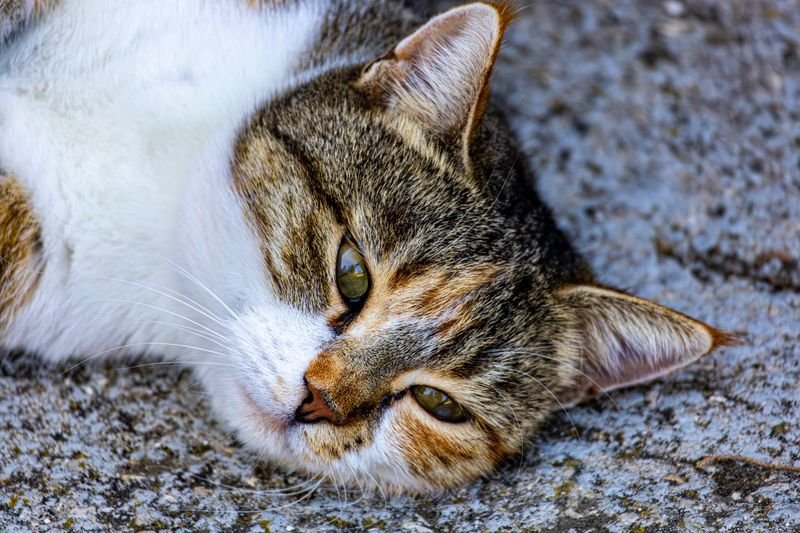
Cats are experts at hiding discomfort, which is exactly why feline dental problems so often go unnoticed until they’re serious. Here’s what every cat owner should know.
Cats get dental disease too
According to veterinary dental data, roughly 70% of cats show signs of periodontal disease by age three. Left unchecked, it causes pain, tooth loss and infections that can affect the whole body.
Signs your cat needs attention
- Bad breath that won’t go away
- Drooling or pawing at the mouth
- Eating on one side or dropping food
- Red or inflamed gums
- Yellow-brown tartar on the teeth
Why anesthesia-free works well for cats
Cats are famously stressed by carriers and clinics. Anesthesia-free cleaning happens at home while your cat stays awake — no sedation, no fasting, no recovery. A trained technician uses gentle, low-stress handling to scale plaque and tartar above the gumline, then polishes and rinses. Most visits take under an hour.
Because there’s no anesthesia, it’s especially reassuring for older cats or those with health conditions where sedation carries extra risk.
What it can’t replace
If your cat has advanced disease, resorptive lesions, or needs X-rays or extractions, that requires a veterinarian under anesthesia. Anesthesia-free cleaning is preventive and cosmetic — we’ll always refer you to a vet when there’s more going on.
How often?
Aim for a professional cleaning every 6 to 12 months, and support it with dental treats or brushing at home if your cat tolerates it.
Ready to freshen that feline smile? See cat teeth cleaning or book a visit across the Bay Area.