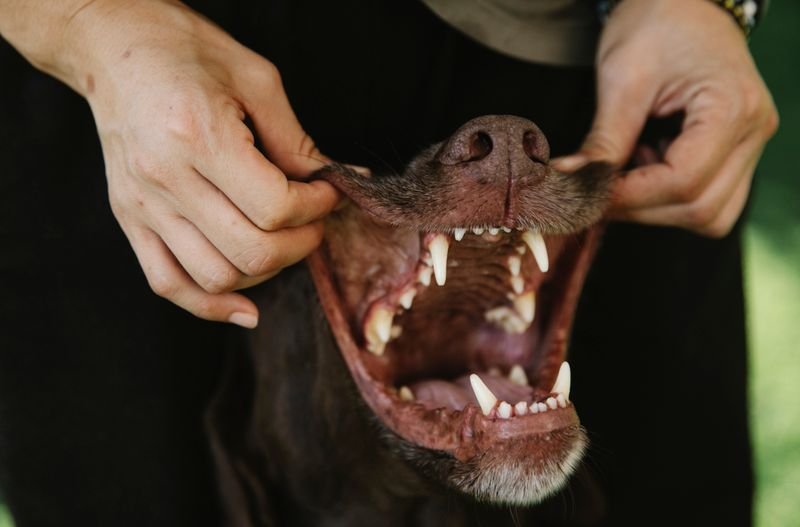
Dental disease is easy to miss because dogs hide discomfort well. Knowing the warning signs lets you act before small problems become painful — and expensive.
The 7 signs to watch for
- Persistent bad breath. A little “dog breath” is normal; a strong, lingering odor usually means bacteria and tartar.
- Yellow or brown tartar. Hard buildup along the gumline is the most visible red flag.
- Red, swollen or bleeding gums. Healthy gums are pink and firm; inflammation is an early sign of gum disease.
- Drooling more than usual. Especially if it’s tinged with blood.
- Trouble eating. Chewing on one side, dropping food or suddenly preferring soft food.
- Pawing at the mouth or face rubbing. A sign something hurts.
- Loose or missing teeth. A sign disease has already advanced — see a vet promptly.
Why it matters beyond the mouth
Dental disease isn’t only about teeth. Bacteria from infected gums can affect the heart, liver and kidneys over time. With the American Veterinary Dental College reporting that 80% of dogs show signs of periodontal disease by age three, prevention is genuinely worth it.
What to do next
- Mild signs (bad breath, light tartar): Start brushing regularly and book a professional cleaning to reset.
- Moderate signs (red gums, heavy tartar): Get a hands-on assessment to confirm your dog is a candidate for cleaning.
- Severe signs (bleeding, loose teeth, pain): See a veterinarian — this needs anesthesia, X-rays or treatment.
If your dog is showing early signs and you’d like a gentle, anesthesia-free cleaning at home, check the warning signs and pricing or book a free assessment. We’ll always tell you honestly if a vet visit is the better next step.